
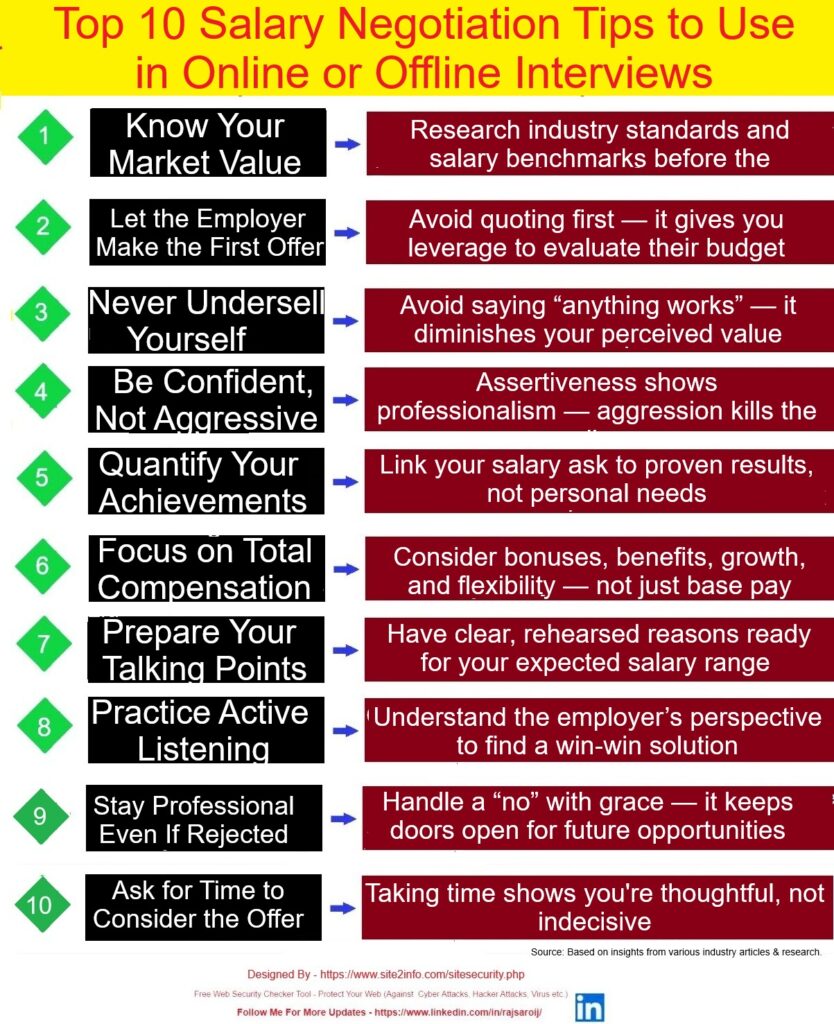
Top 10 Salary Negotiation Tips (Online & Offline Interviews)
Salary negotiation isn’t about being difficult — it’s about aligning your value with the right opportunity. Preparation, professionalism, and confidence are your greatest tools.
Salary negotiation isn’t awkward — it’s essential.
Whether you’re interviewing virtually or in person, here are 10 powerful tips to help you secure the pay you deserve:
Step [1] – Know Your Market Value
Before entering any negotiation, research industry benchmarks for your role, experience level, and location. Tools like Glassdoor, Payscale, or LinkedIn Salary can give you realistic expectations — empowering you to negotiate from a position of knowledge.
Step [2] – Let the Employer Go First
Avoid being the first to mention numbers. Let the employer share their offer first — it sets the starting point and gives you leverage to respond thoughtfully based on their expectations.
Step [3] – Don’t Undersell Yourself
Phrases like “I’m open to anything” or “Whatever works for you” weaken your perceived value. Be prepared with a confident salary range based on your market research and experience.
Step [4] – Be Confident, Not Pushy
Confidence shows that you know your worth. However, balance it with professionalism — being aggressive or entitled can create discomfort and harm your chances.
Step [5] – Quantify Your Achievements
Support your salary request with data and real outcomes — like “I increased revenue by 20%” or “Led a project that saved the company $30,000.” Numbers speak louder than opinions.
Step [6] – Consider Total Compensation
Salary is just one part of the package. Take into account benefits like health insurance, paid time off, bonuses, remote work, and equity — all of which contribute to the true value of an offer.
Step [7] – Prepare Your Talking Points
Rehearse how you’ll communicate your expectations and value. Have clear reasoning ready so you can respond with confidence when the salary question comes up.
Step [8] – Listen Actively
Good negotiators don’t just talk — they listen. Pay attention to what the employer is offering and why. This helps you respond strategically, rather than react emotionally.
Step [9] – Stay Professional if Rejected
If the employer declines your counteroffer, don’t burn bridges. Stay gracious and open — you might receive a revised offer or be considered for future opportunities.
Step [10] – Ask for Time to Decide
Don’t rush your decision. Request 24–48 hours to review the offer in full. This shows maturity and ensures you’re making a well-informed choice.